When it comes to landscape photography in the American Southwest, no destination punches harder than Moab, Utah. Within a one-hour radius you have two of the most visually stunning national parks in the country, a state park, and dozens of freely accessible locations that most visitors never find. I’ve spent a lot of time in this region over the past several years and this guide covers every spot worth pointing a lens at, along with the practical details you need to make the most of your time there.
About Moab
Moab sits at the center of two completely different photographic worlds. To the north, Arches National Park preserves over 2,000 natural sandstone arches — including the iconic Delicate Arch — along with towering fins, balanced rocks, and pinnacles that glow deep orange and red at golden hour. To the southwest, Canyonlands National Park offers a completely different mood: vast, remote, and carved into endless canyons and mesas by the Colorado and Green Rivers. Together they make Moab one of the most rewarding photography destinations on the planet.
Getting There
Nearest airport: Canyonlands Field Airport (CNY) is about 20 minutes from Moab. If flights are limited, Grand Junction Regional (GJT) in Colorado is roughly 90 minutes away and typically has more options.
Where to stay: For maximum convenience to Arches NP, the Holiday Inn Express Moab puts you less than 5 minutes from the park entrance. If you prefer to stay in town, the Hampton Inn Moab is a solid option.
1. Delicate Arch
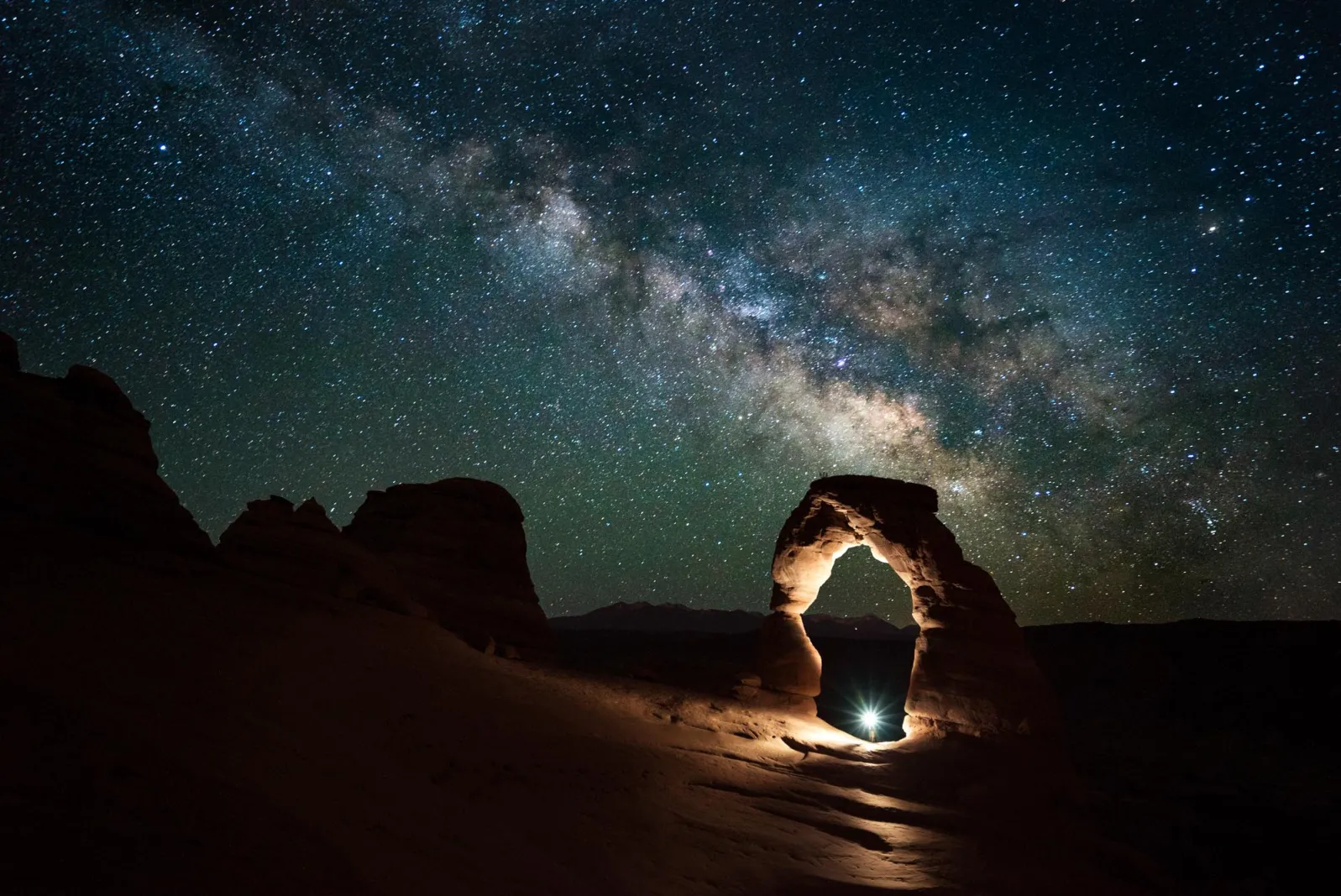
There’s no more iconic image in Moab — and few more iconic in all of landscape photography. Delicate Arch is the crown jewel of Arches National Park and a legitimate bucket list location for photographers worldwide.
The hike is 3.2 miles roundtrip with about 500 feet of elevation gain. Roughly a third of it is an exposed slab of slickrock with no shade, so if you’re visiting in summer, plan your timing carefully. My recommendation is to start the hike in the late afternoon, arriving at the arch 30 to 60 minutes before sunset. You’ll avoid the worst heat and arrive with time to scout your composition before the light gets interesting.
Fair warning: sunset at Delicate Arch is a crowd event. You’ll likely share the space with 50 to 100 or more people. The move is to be patient — let the tourists have their moment under the arch before the peak light hits, then politely work the crowd. The real reward comes after sunset, when nearly everyone leaves. It’s not uncommon to have the entire arch to yourself in the dark, and in summer the Milky Way rises right above it. If astrophotography is your thing, this is one of the greatest compositions you’ll ever find.
- Hiking difficulty: Moderate (3.2 miles RT, 500 ft gain)
- Best time of year: Year-round
- Best time of day: Sunset and night
- Lens: Wide angle or telephoto
2. Mesa Arch
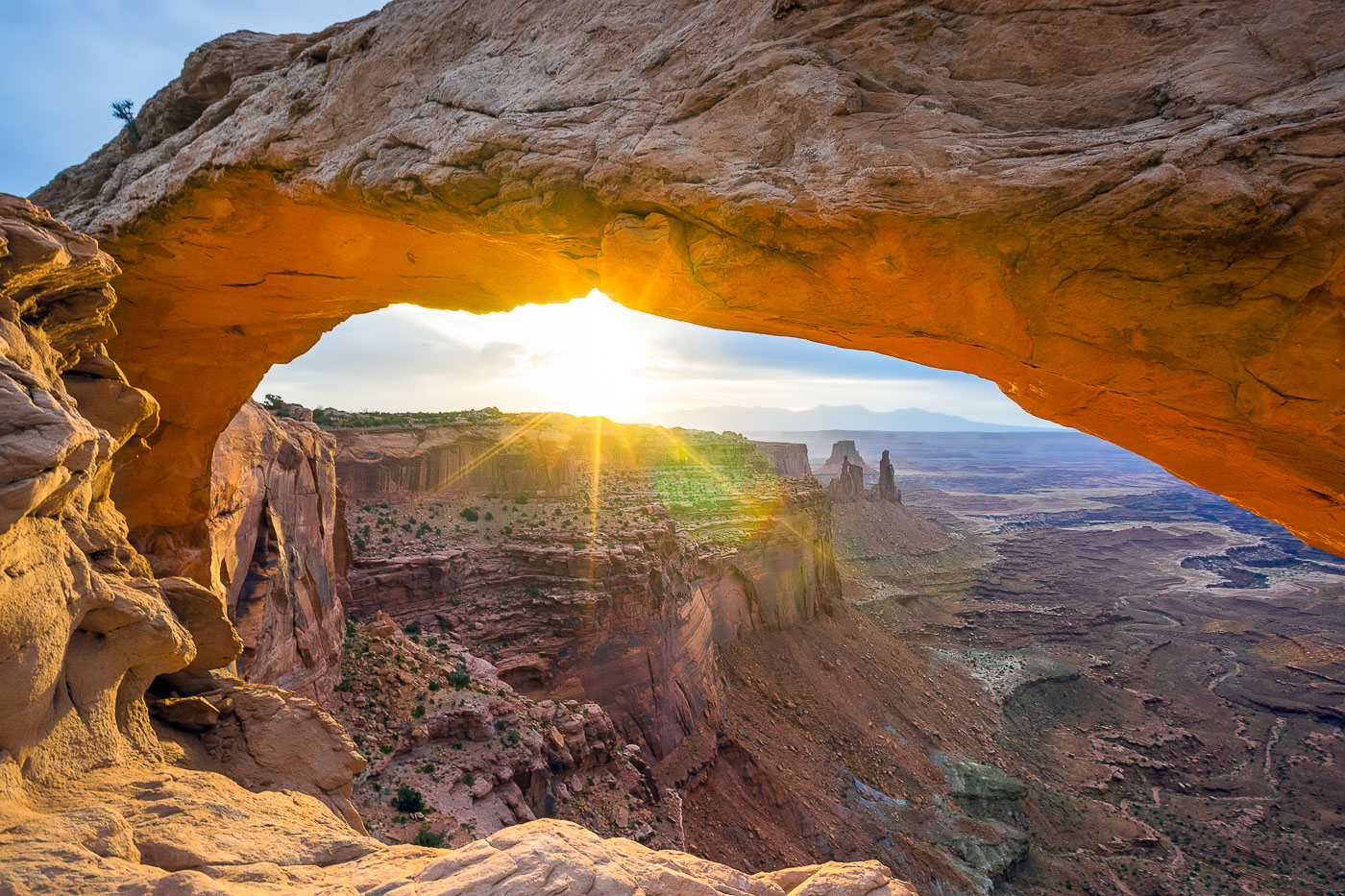
Mesa Arch sits inside Canyonlands National Park and is the most photographed sunrise location in all of Moab — and for good reason. The arch frames an incredible view of the canyon below, and at sunrise the underside of the arch glows fiery orange as it reflects light from the canyon walls beneath.
Unlike Delicate Arch, this is a sunrise location. The hike is barely a quarter mile with almost no elevation gain, which means it fills up fast. Arrive at least an hour before sunrise to get a good tripod position. I’ve been to Mesa Arch three times — twice we were the only ones there, and the third time one other photographer had beaten us. The earlier the better.
After you photograph the arch, don’t rush out of Canyonlands. Stop at every pull-off on the way back out — the overlooks inside the park are spectacular.
- Hiking difficulty: Easy (0.5 miles RT, minimal gain)
- Best time of year: Year-round
- Best time of day: Sunrise
- Lens: Wide angle or fisheye
3. Corona Arch
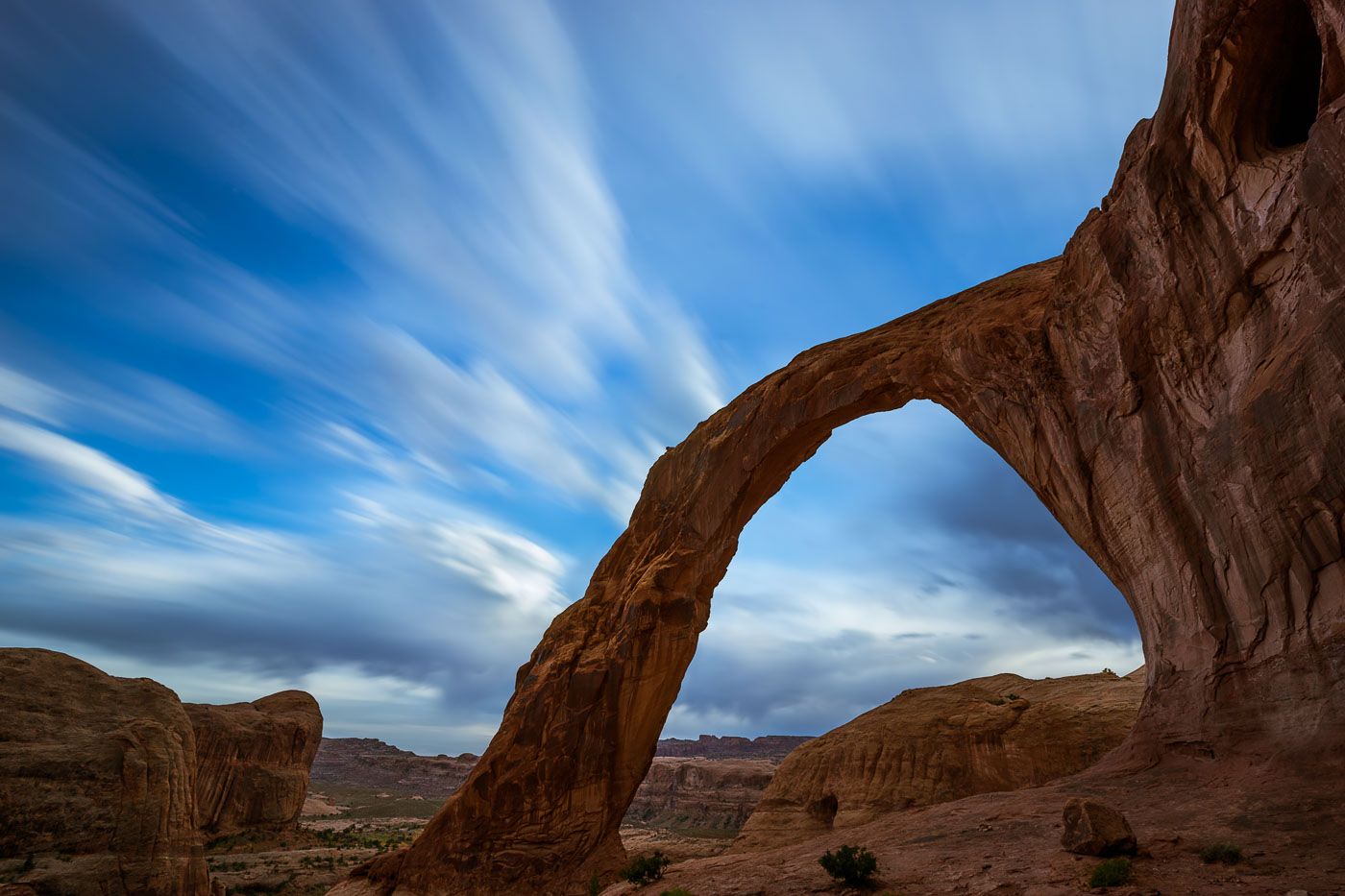
One of the most stunning arches in the Moab area isn’t in a national park at all. Corona Arch sits on BLM land, costs nothing to visit, and is genuinely jaw-dropping — 140 feet tall and 105 feet wide. It’s large enough that a plane once flew through it (look it up).
To get there, drive north from Moab and turn left onto Highway 279 before you reach the Arches entrance. The drive along 279 is worth doing slowly — the Colorado River runs along your left and sheer sandstone walls rise to your right. Look for a gravel parking area on the right and a signed trailhead. The hike is 2.5 miles roundtrip with about 480 feet of elevation gain and involves some fun route-finding: you’ll grip chains across a steep slickrock section and scale a short ladder over a boulder. It’s not technical, but it’s more engaging than most Moab hikes.
- Hiking difficulty: Moderate (2.5 miles RT, 480 ft gain)
- Best time of year: Year-round
- Best time of day: Sunset and night
- Lens: Wide angle
4. The Windows and Turret Arch
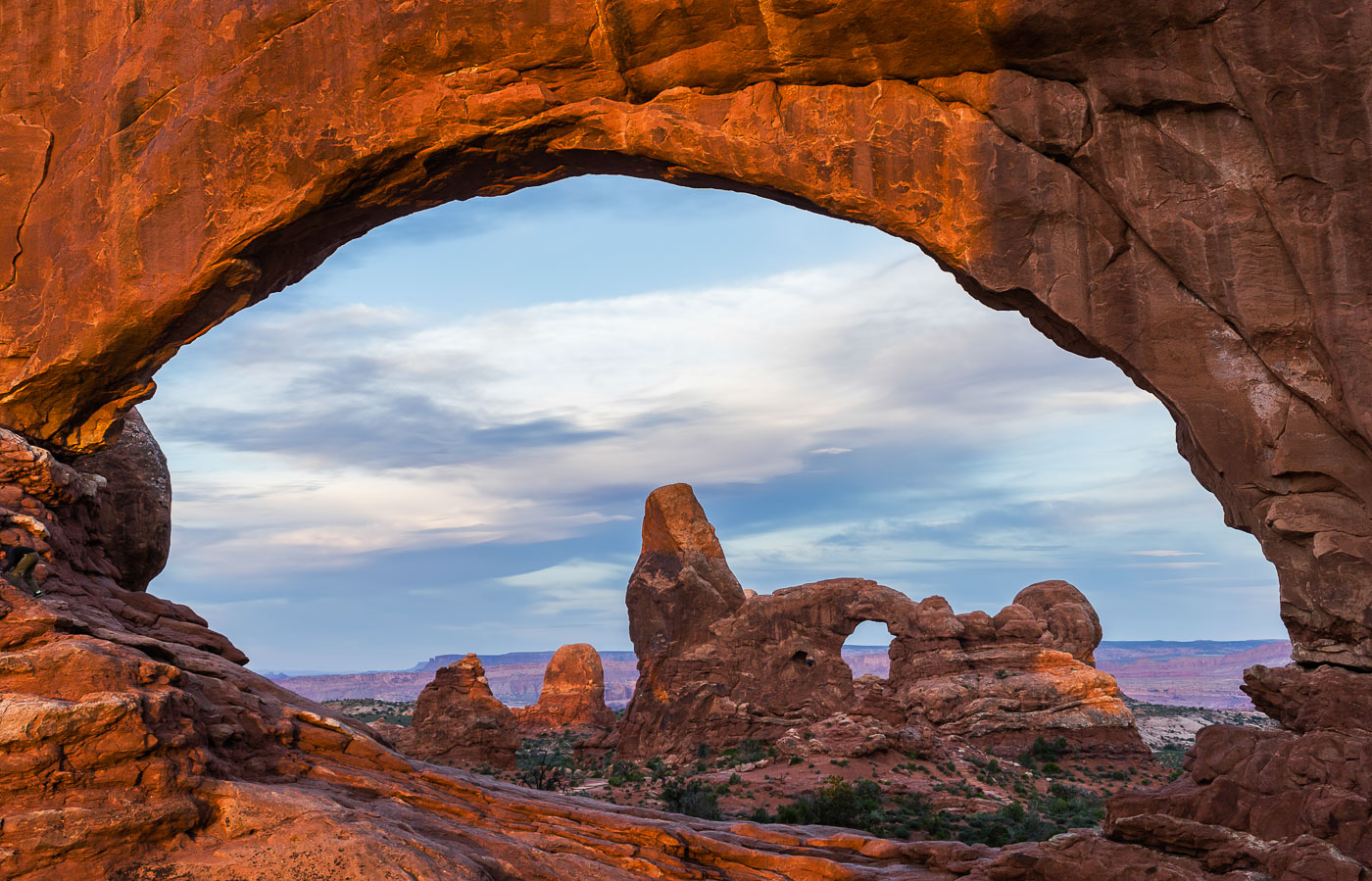
The view looking through the North Window at Turret Arch in the distance is one of the most sought-after compositions in Arches NP. Getting there requires a bit more nerve than most Moab locations. From the Windows parking lot, you hike up to the North Window, then scramble down and follow a path to the left, working your way up to a ledge with a clear view of Turret Arch framed in the opening.
This scramble is not trivial, especially with a camera bag and tripod. Go with a partner who can help hand equipment across the difficult sections. If there is any ice or snow on the rocks, skip it entirely. That said, it’s a composition that rewards the effort significantly.
- Hiking difficulty: Easy to moderate (short hike, exposed scramble)
- Best time of year: Year-round (avoid winter if icy)
- Best time of day: Sunrise and night
- Lens: Wide angle
5. Balanced Rock
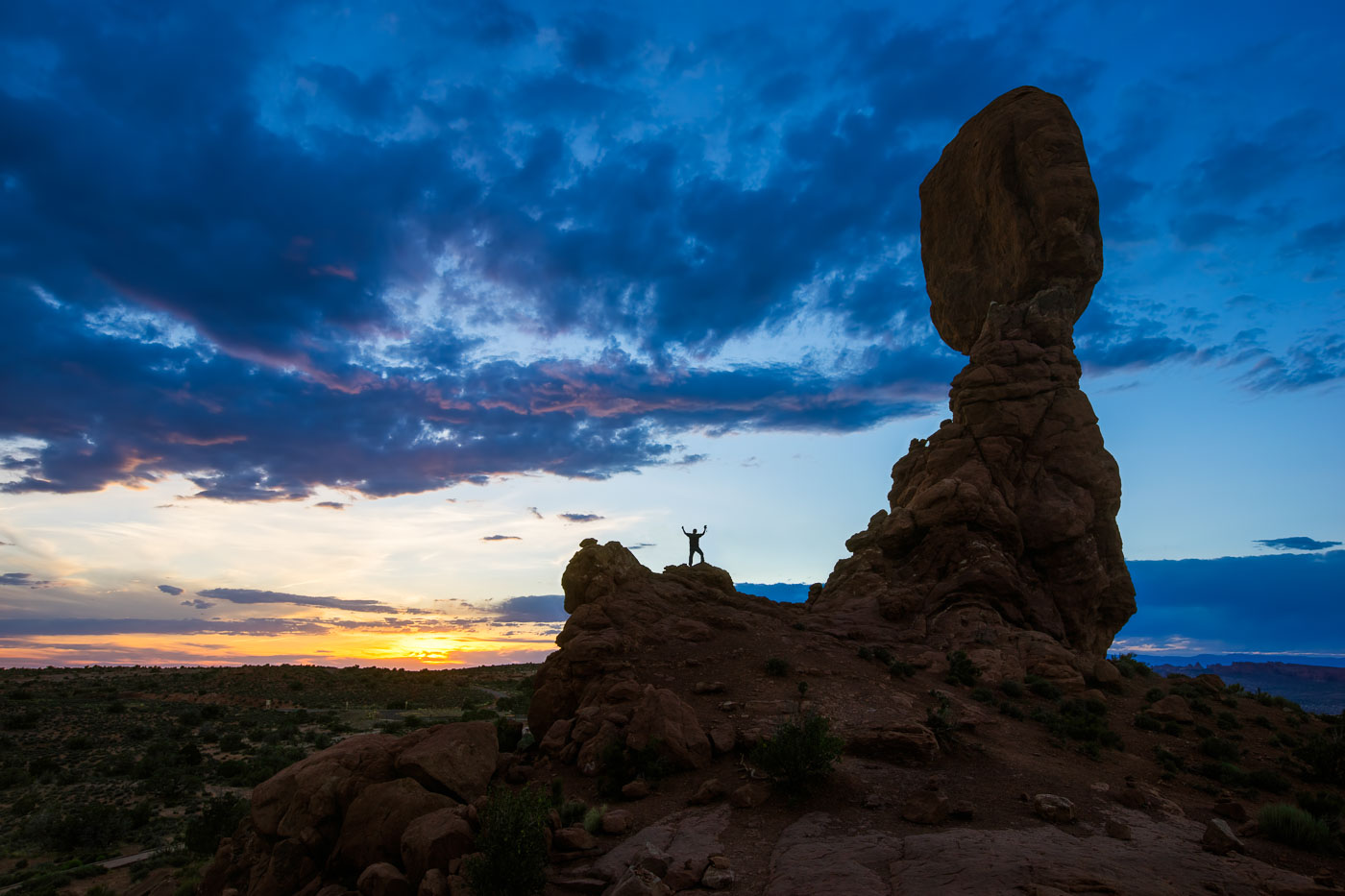
If you want a spectacular subject with virtually zero effort, Balanced Rock delivers. At 128 feet tall with a cap rock the size of three school buses, it’s one of the most impressive geological formations in the park — and the parking lot is right off the main road about 9 miles into Arches NP.
It photographs beautifully at sunset when the warm light hits the sandstone, and equally well at night with a star-filled sky above.
- Hiking difficulty: Easy (minimal walking from parking lot)
- Best time of year: Year-round
- Best time of day: Sunset and night
- Lens: Wide angle
6. Park Avenue
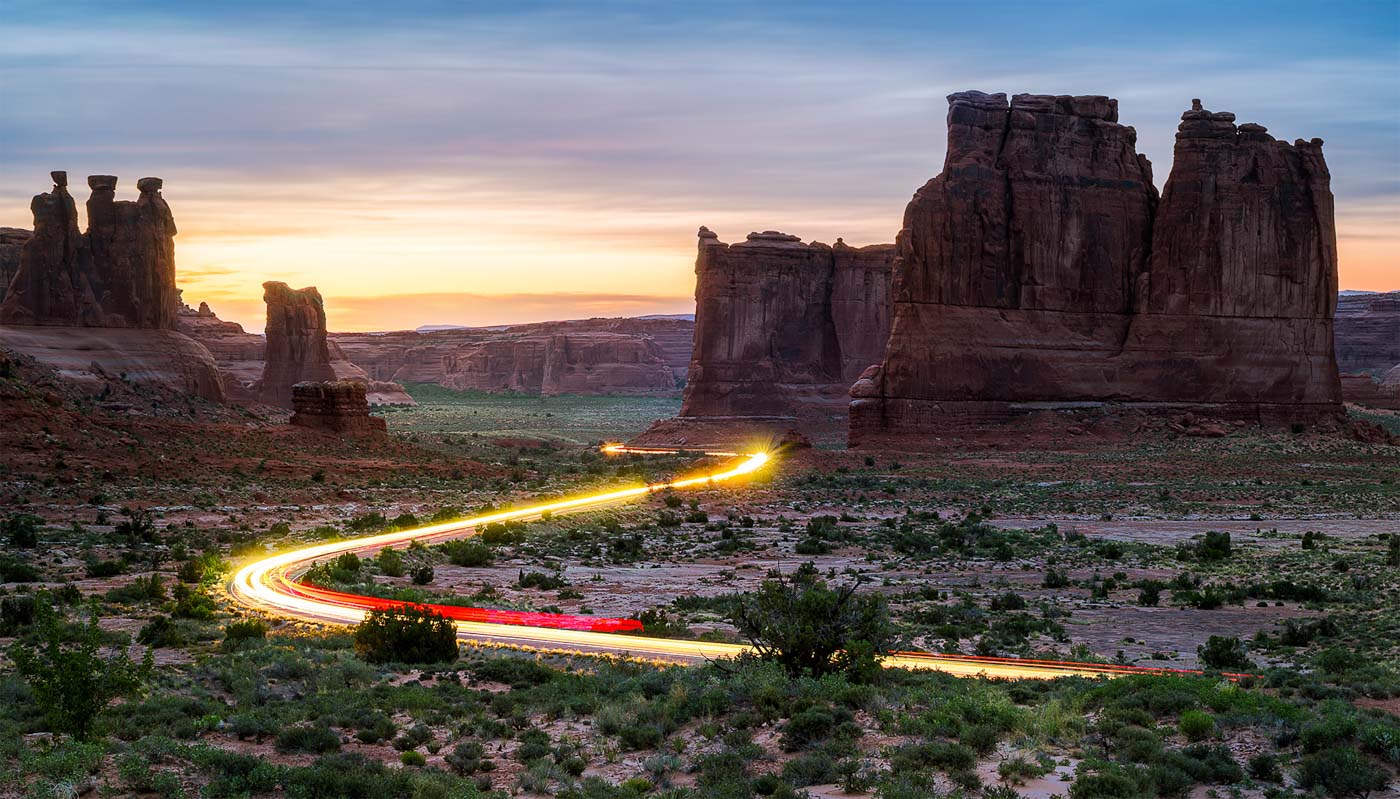
The entrance corridor of Arches National Park may be the most dramatic park entrance in the country. Towering sandstone fins rise on either side of the road, and the first trailhead you encounter — Park Avenue — is an easy walk that puts you right in the middle of them. At the far end, you’re looking at The Three Gossips on the left and The Organ and Tower of Babel on the right.
Don’t skip this one just because it’s near the entrance. The scale of these formations is hard to appreciate from a car window, and the road itself makes for a fantastic long-exposure composition at blue hour.
- Hiking difficulty: Easy
- Best time of year: Year-round
- Best time of day: Sunset and night
- Lens: Wide angle
7. Landscape Arch
At 290 feet wide, Landscape Arch is the widest arch in Moab and one of the widest in the world. It’s also a reminder that these formations are not permanent — large sections collapsed as recently as 1991, and the trail underneath has been closed ever since. You’ll photograph it from the end of a 1.5-mile trail, but the hike itself is beautiful and offers plenty of additional shooting opportunities along the way.
- Hiking difficulty: Moderate
- Best time of year: Year-round
- Best time of day: Sunset
- Lens: Wide angle
Final Thoughts
Moab rewards photographers who plan their timing carefully and aren’t afraid to get there early or stay late. The magic windows are narrow but unforgettable. If you have any questions about any of these locations, drop them in the comments below.